Six (and a half) things worth knowing before cycling Annapurna Circuit in Nepal
1. You Chose Well
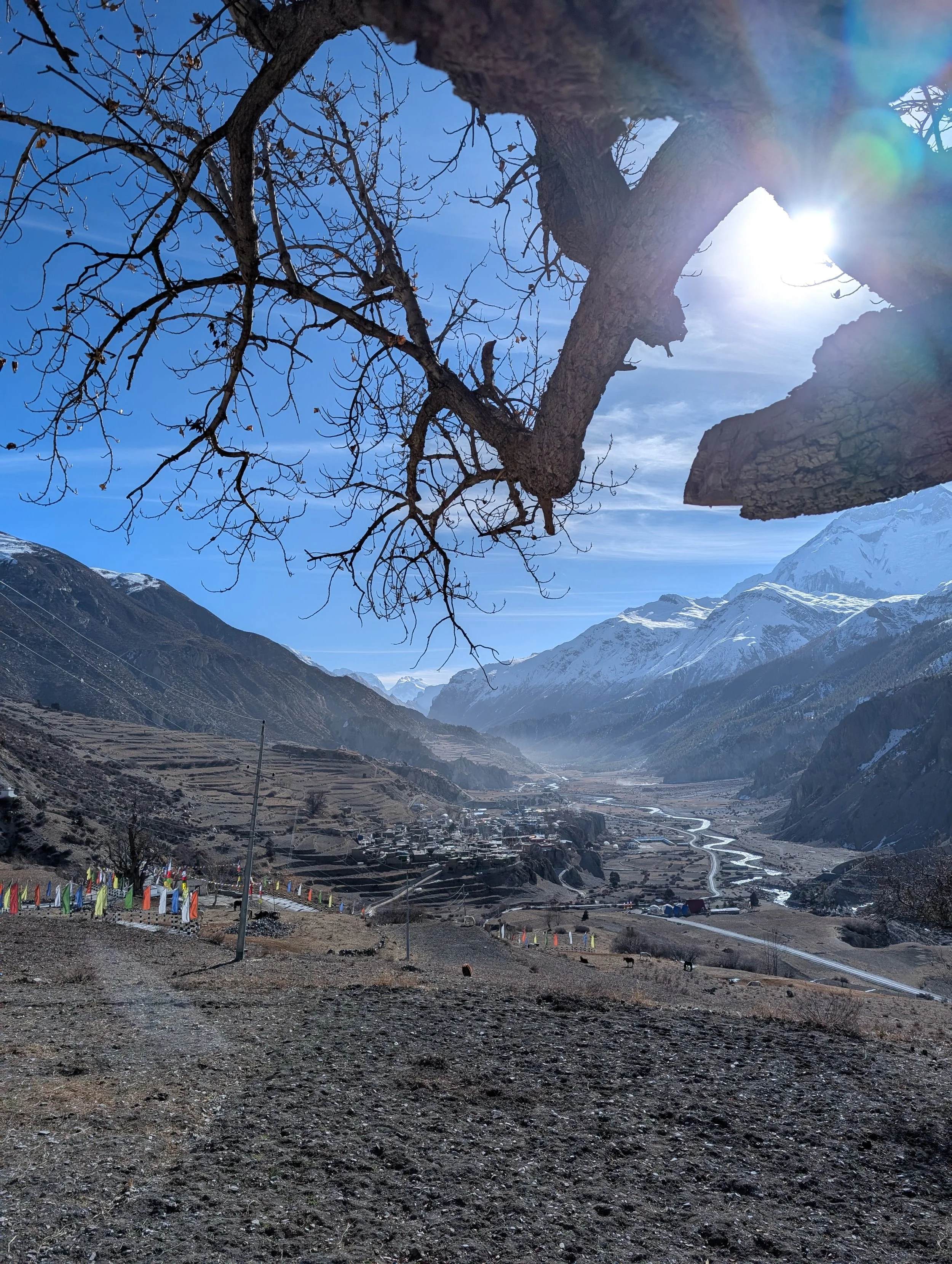
It has it all: a physical challenge with Thorong La at 5,416 m, the deep green gorges of the Marshyangdi river, 6,000–8,000 m peaks of the Annapurna range, lakes, waterfalls, and colorful villages—simple in appearance, yet filled with cultural richness and a heartwarming welcome from their inhabitants. No wonder that since its opening in 1977, the Annapurna Circuit has been voted the best long-distance trek in the world.
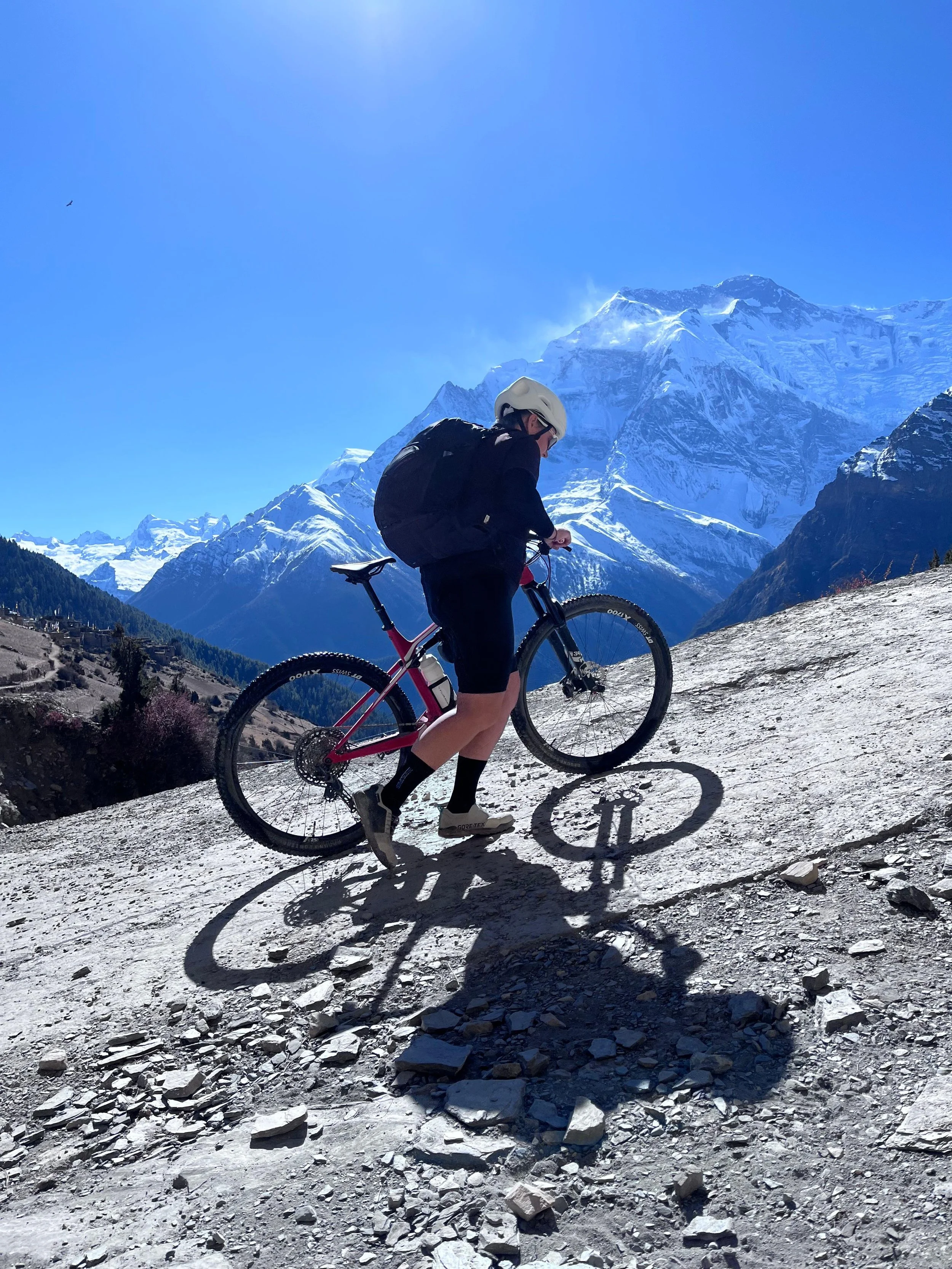
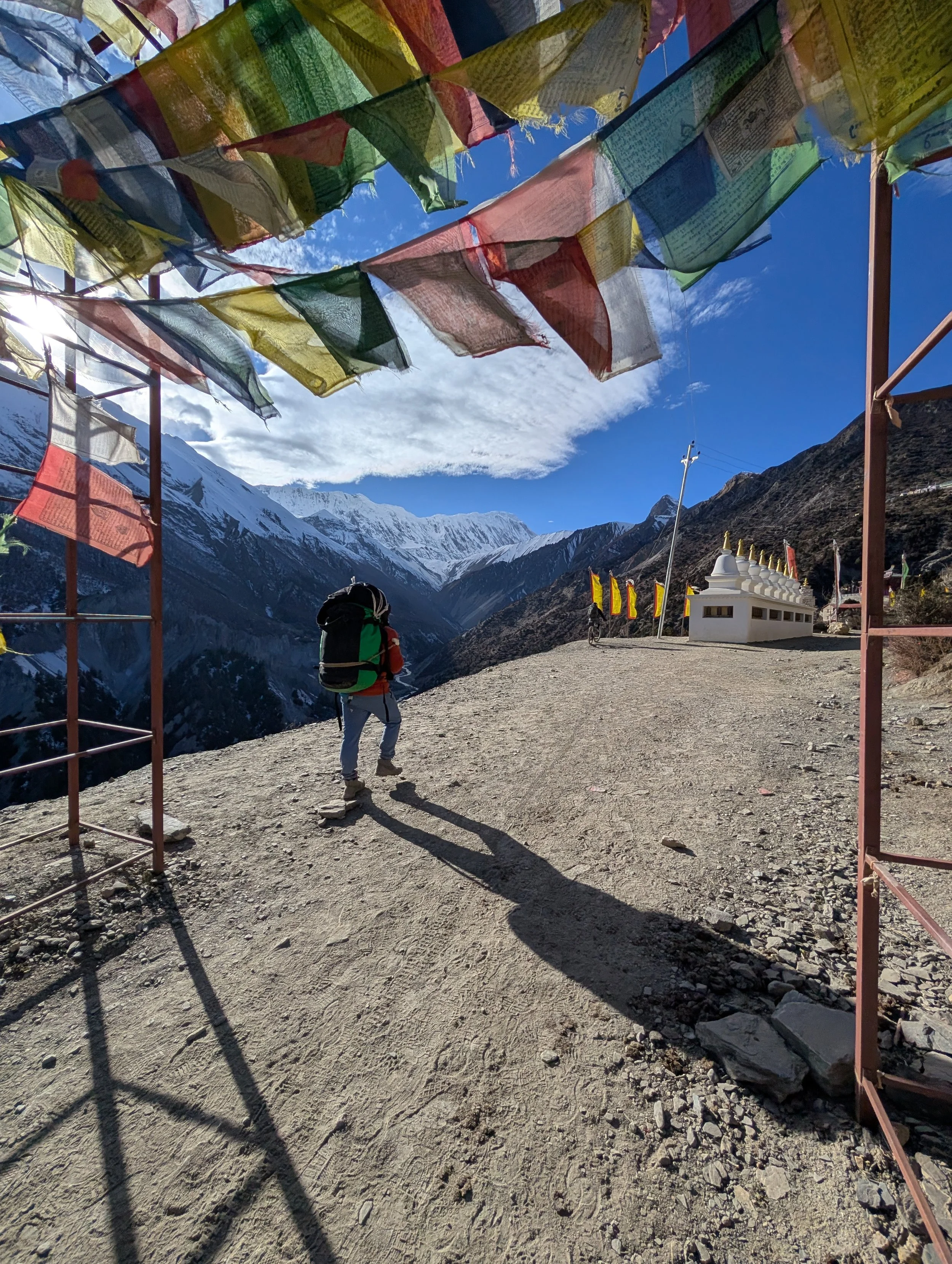
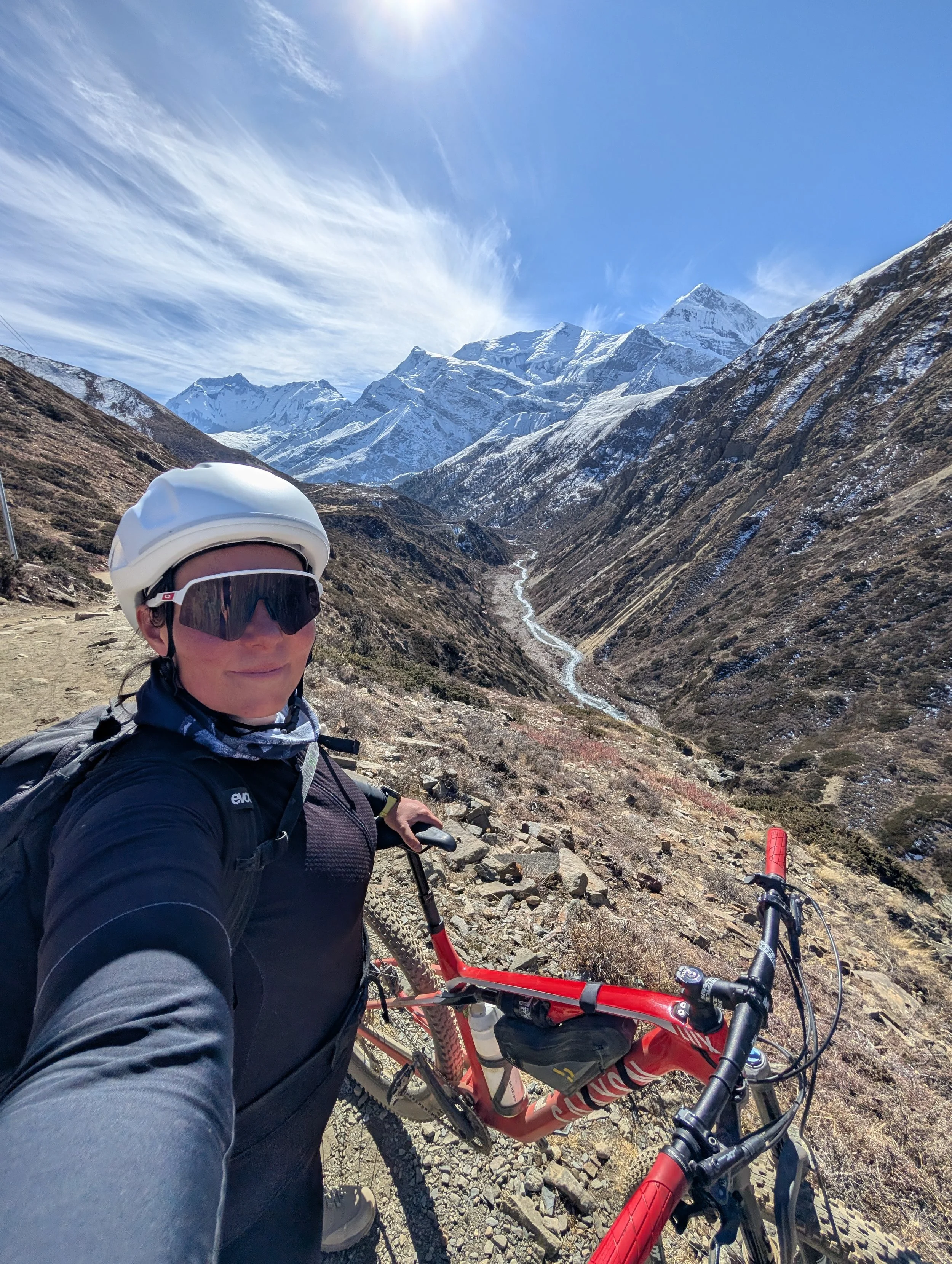
Views of Annapurna II, III, IV, Gangapurna, and Tilicho Peak accompany you almost from the beginning. First they appear in the distance, then suddenly right in front of you while you're drinking tea in a lodge in Ngawal. From 3,600 m a.s.l., even 8,000-meter peaks can seem “small”—after all, you only see their final 4,000 m. But don’t be fooled. These are the last meters of giants, and their scale grounds you, reminding you that you are only a guest there, moving at their mercy.
As the days pass, you walk through natural tunnels of bushes and trees, Annapurna views opening on one side of the valley and Tilicho Peak appearing far ahead beyond Manang. You move from one valley to another, sometimes climbing gently, sometimes steeply—towards villages like Gyaru or Shree Kharka, passing prayers at mani walls and sharing a mint tea in the warmth of the sun or by a fire inside a lodge.
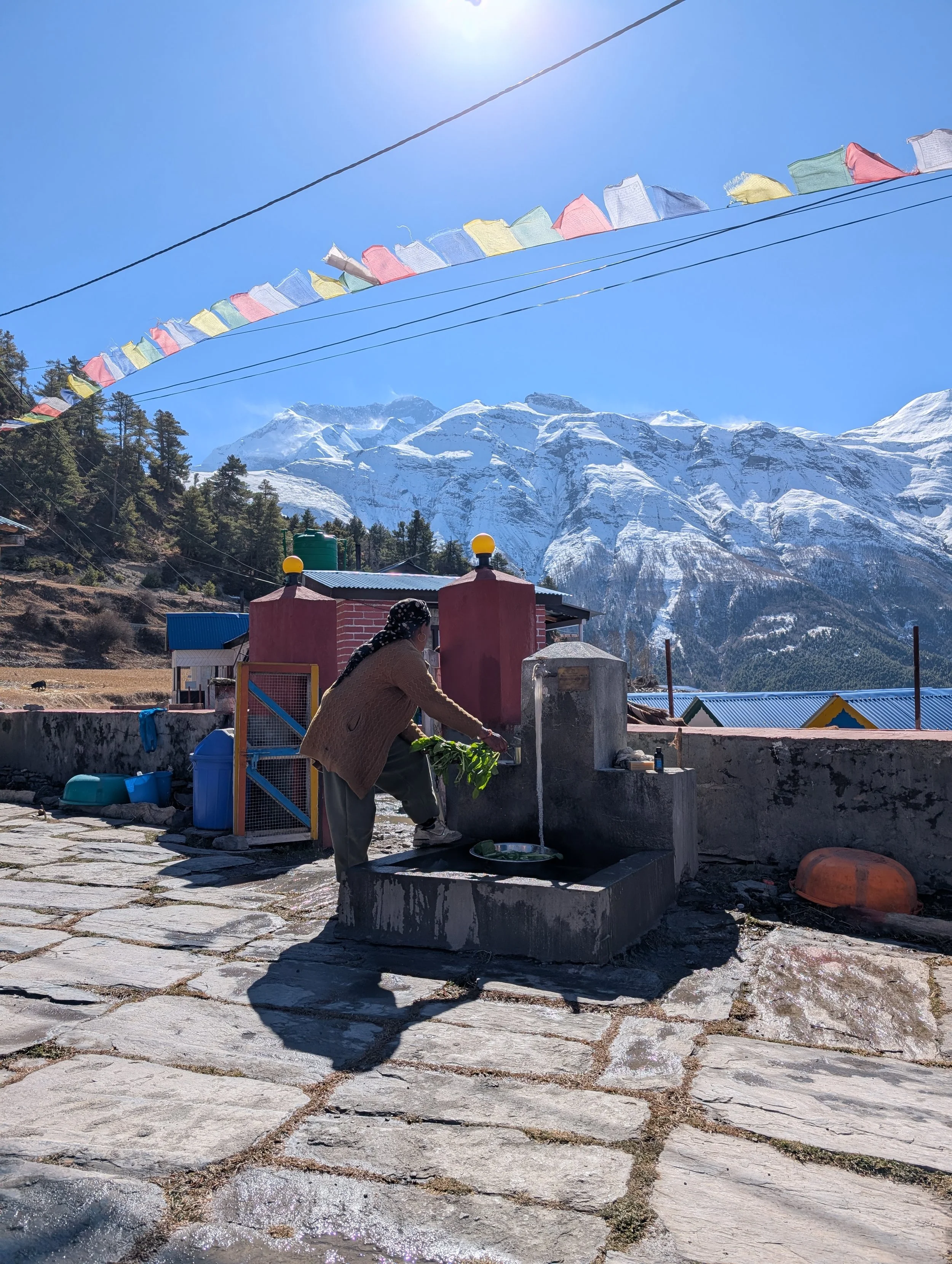
Little by little, as you settle into each new place, the landscape stops being the only thing that matters. You will realize you are also on a cultural journey. Hindu villages in the lower parts gradually give way to Tibetan rhythms higher up, with their religious sanctuaries, traditional clothing, and warm atmosphere.
And at some point, the question of how you travel starts to matter. The Annapurna Circuit is very welcoming for solo travelers: many lodges, English-speaking hosts, and relatively easy solutions in case of emergency. But how would you feel about spending time in a small kitchen, watching three generations prepare a meal, playing with the children just back from school, or drifting into a hypnotic calm while listening to your guide speak with the owners in melodic Nepali? For a moment, cycling and mountains fade into the background.
2. Peace is Seasonal
In the peak season, from April to May and from September to November, the trail often turns into a pilgrimage procession. Trekkers follow one another, conversations and laughter filling what might otherwise be silence. In the lodges, space is shared with large groups and precious time is lost waiting in long lines.
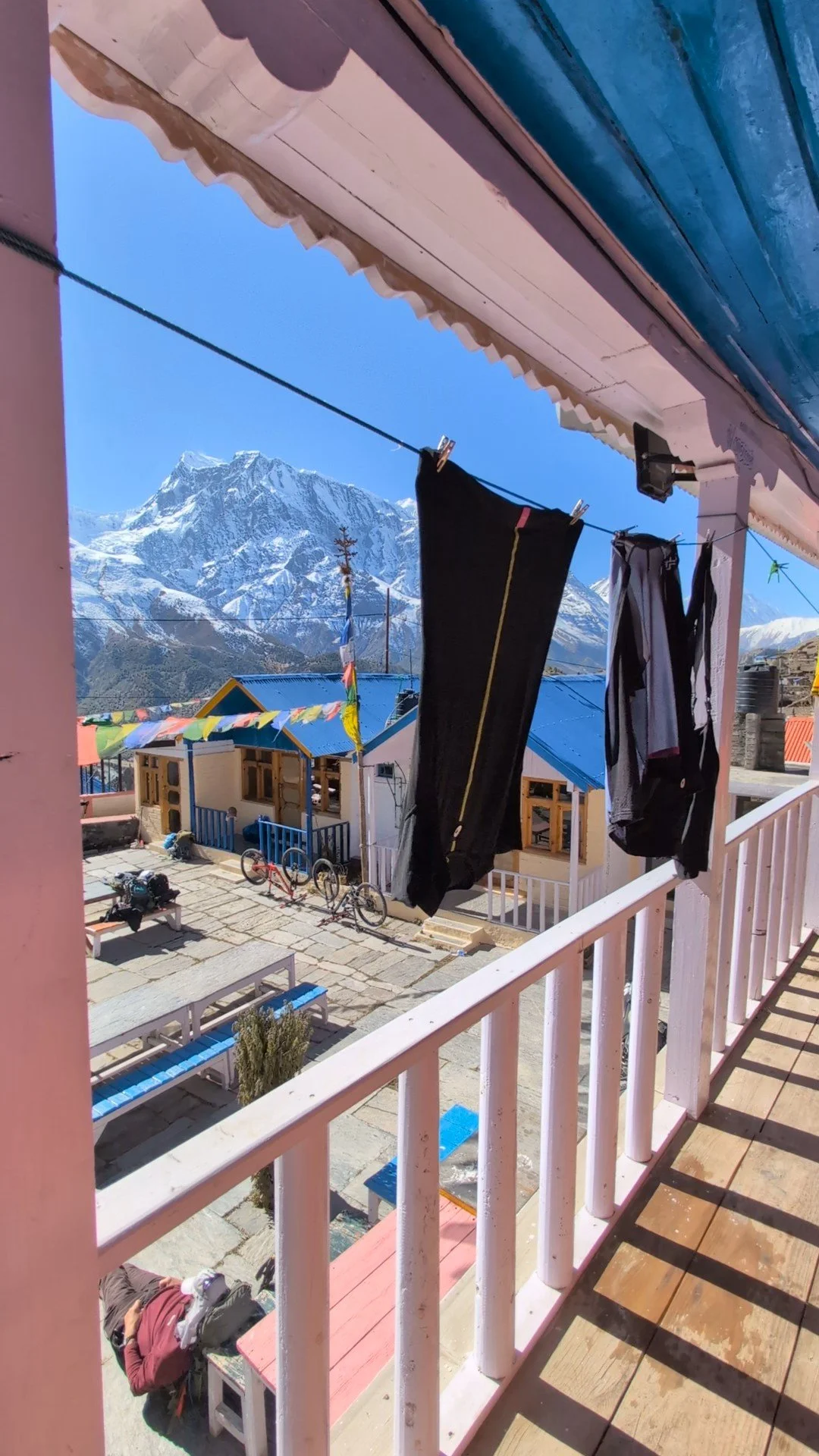
From late November, the walk becomes peaceful. Birds and prayer flags moving in the wind replace the noise. Lodges offer quiet chats with Nepali hosts, hot showers, and sometimes the best room with a mountain view.
The Annapurna Conservation Area is one of the most visited regions in Nepal. The Annapurna Circuit itself is among the country’s most popular treks, with a single main trail and limited infrastructure at high altitudes. So why does the season end in mid-November?
As winter approaches, warm merino layers replace summer t-shirts, thick sleeping bags take the place of light bed sheets, water freezes in the morning, and snowy trails, strong winds, and very low temperatures become part of daily life. Choosing the right moment can change everything. Peace exists—but it must be earned.
3. A Bonus Track
Annapurna Circuit means high altitude, distance from comfort, and sustained physical effort—a combination that demands constant vigilance and slowly builds fatigue. Daily routine and acclimatization steps give each day its purpose.
From Manang, the circuit climbs toward Yak Kharka, then continues high above the valley, where what lies ahead slowly reveals itself: Thorong Phedi at the bottom on the other side, a steep zigzag trail rising to the High Camp, and somewhere beyond it, the pass. But before that, there is a turn that feels different.
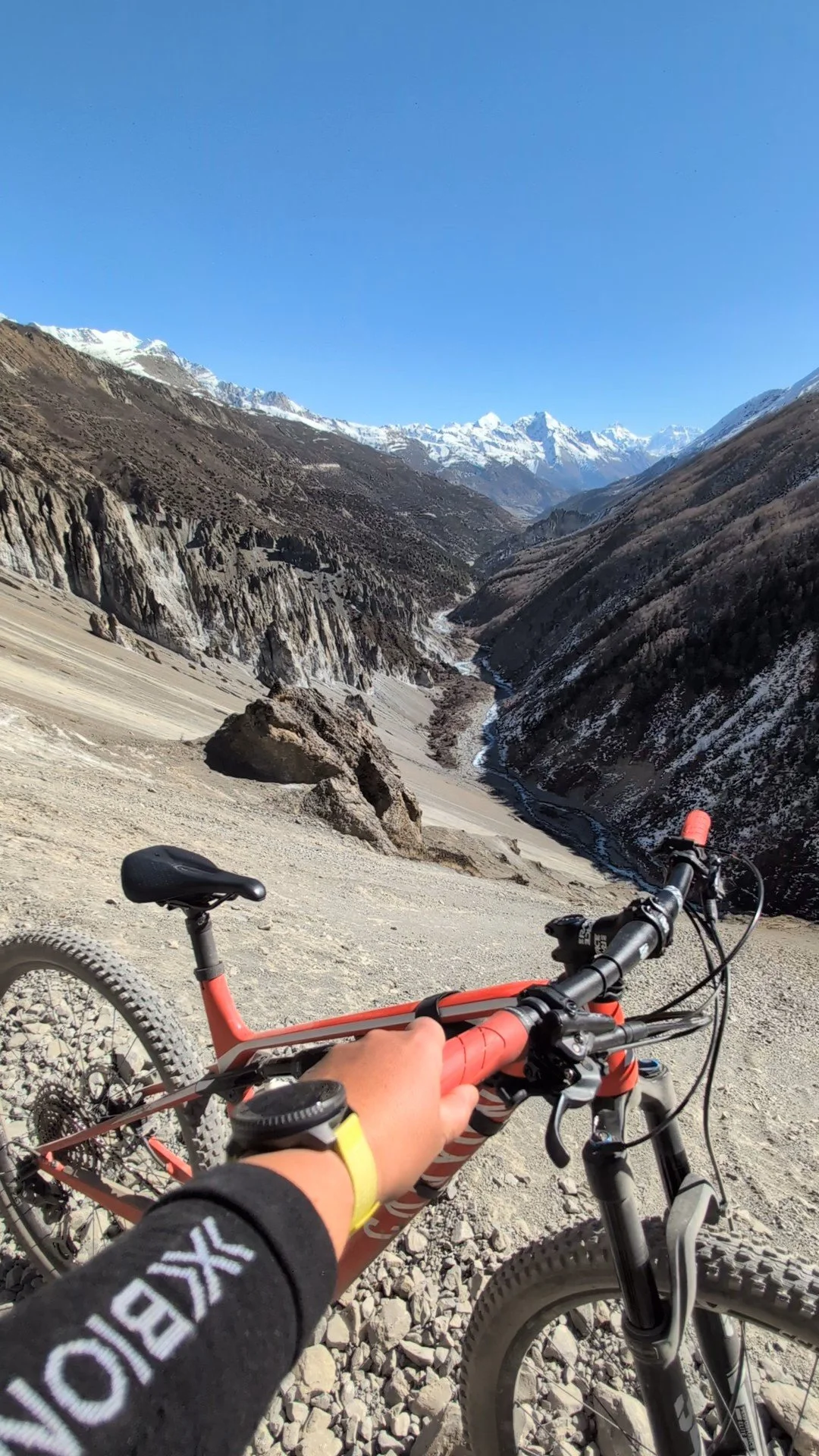
There is a Buddhist monastery with a puja. A village of lodges where you can almost touch the mountains while still lying in bed. A trail cut into an enormous hillside, a Himalayan bridge hanging above a frozen waterfall, and a narrow single track surrounded by silence. With the first pedal strokes, you know that simply being there is what matters.
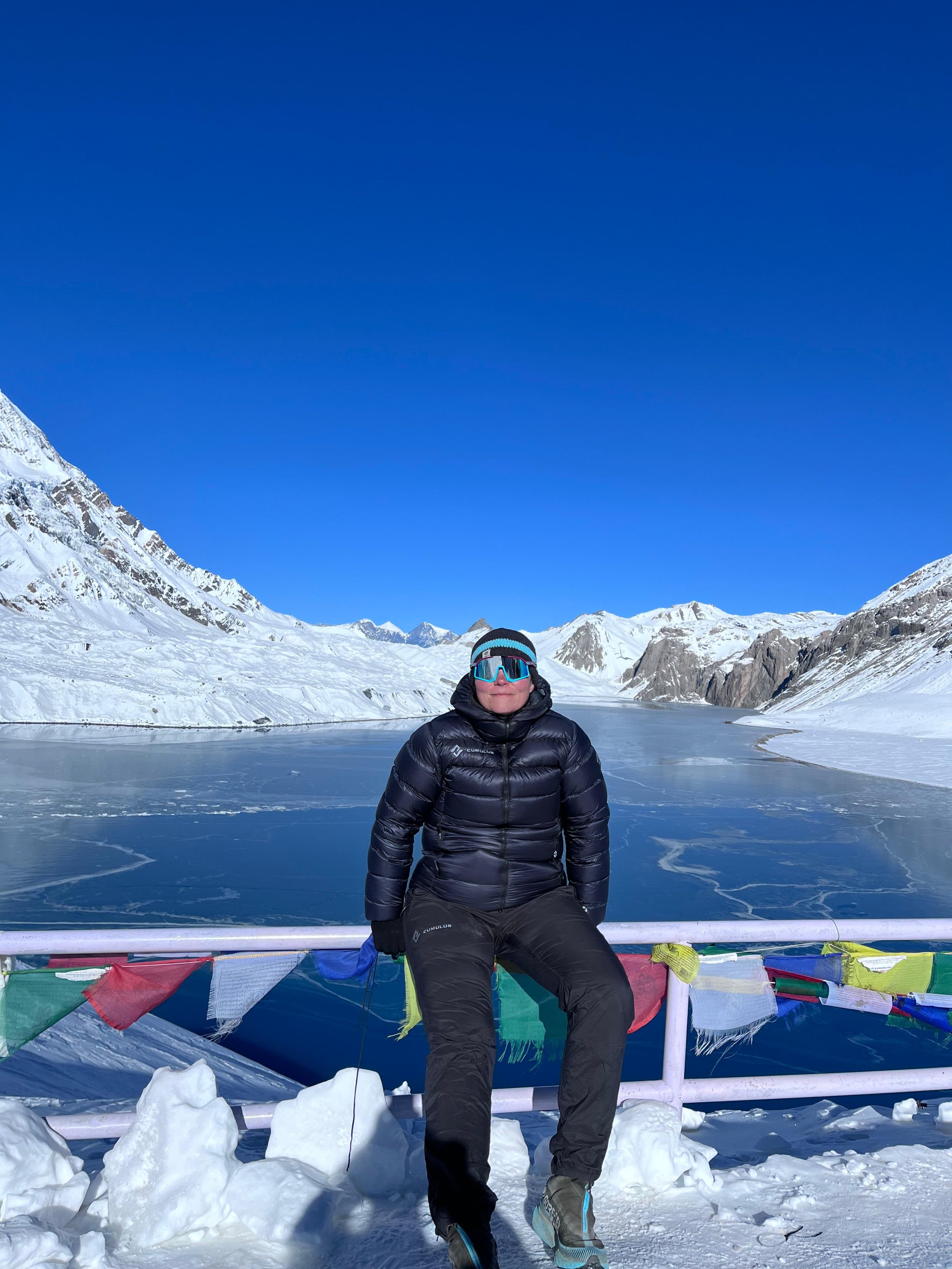
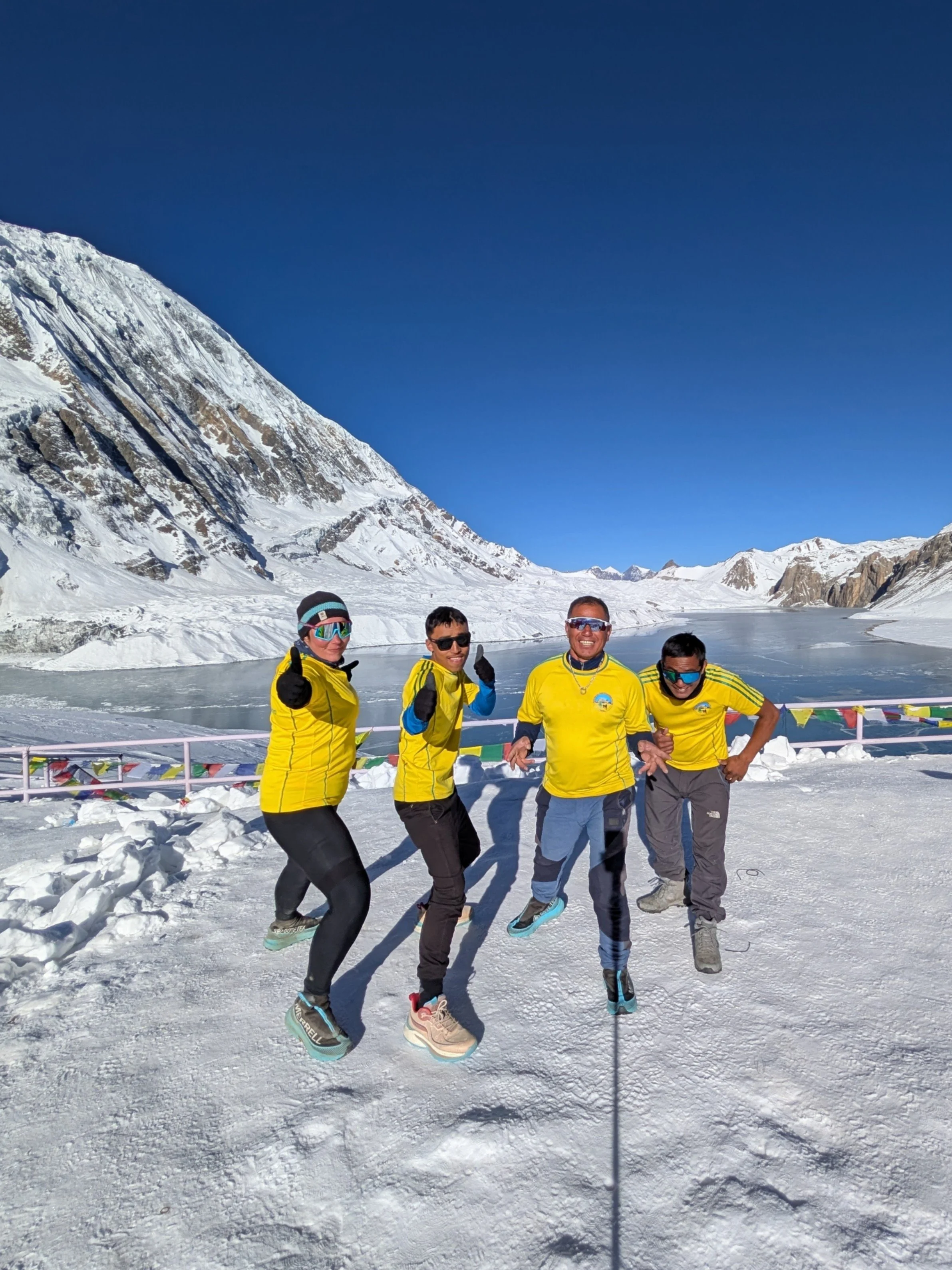
There is a village isolated from the outside world by peaks and glaciers. There is a magnificent lake – Tilicho Lake - a thousand meters higher. There is time—when walking feels light, the rhythm becomes easy, and the sense of "need" disappears.
Seeing it all or not, the circuit remains unchanged.
4. Returning to the Essentials
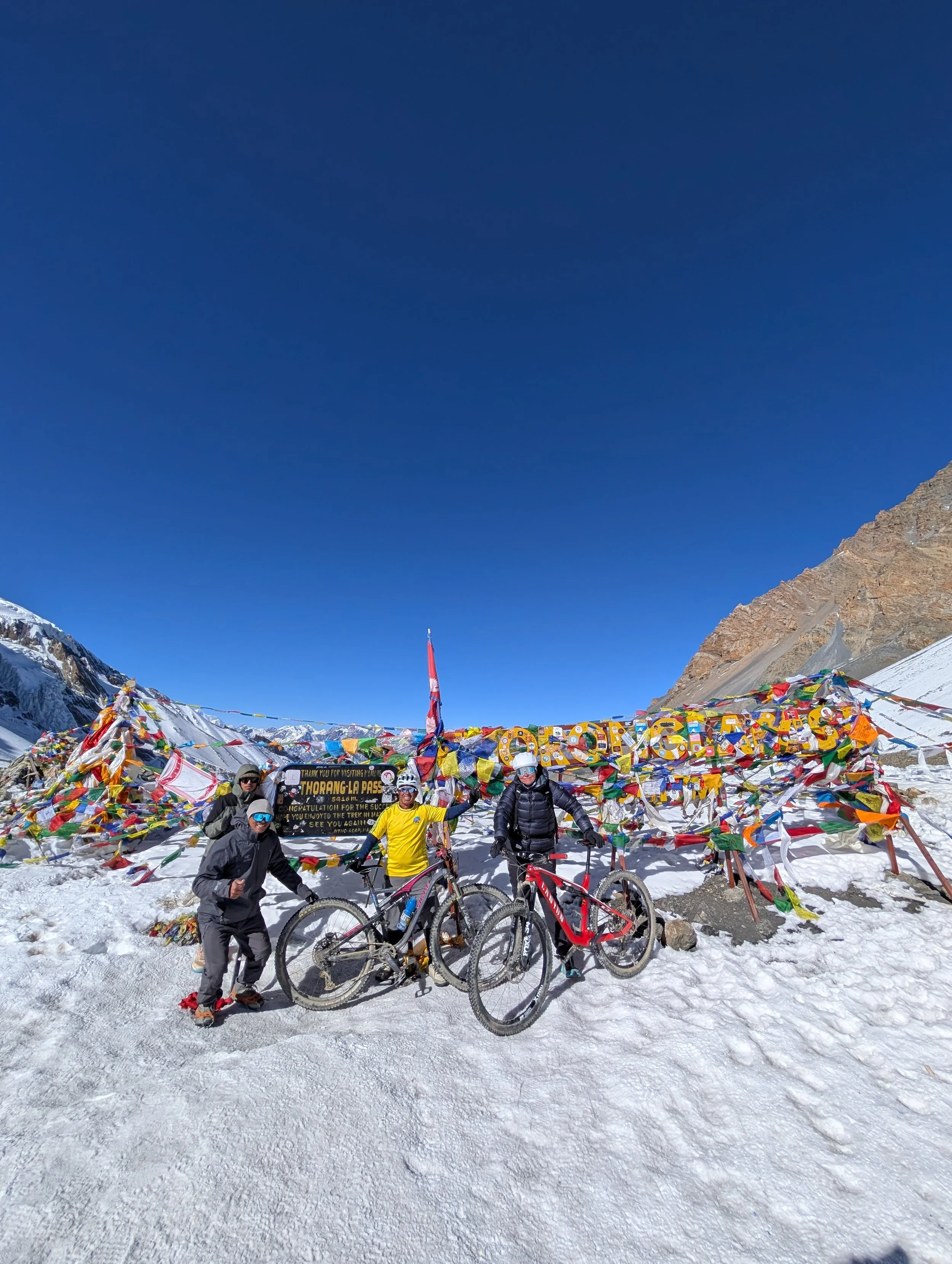
Thorong La pass is mental and physical exhaustion. It is a challenge you have pursued from the first day on the circuit. Now it is behind you. You feel proud and relieved. No more altitude, acclimatization, carrying a bike, or cold nights. The challenge is over. But does that mean the adventure is also over?
When I started the Annapurna Circuit, I dreamed of a cycling trail winding quietly among the mountains. Unnoticed. A beautiful line with no marks, no billboards, no place on the first pages of travel brochures. Just riding, with the mind undisturbed by analysis or objectives. Smiling with the same joy I felt as a kid on my first local trails.
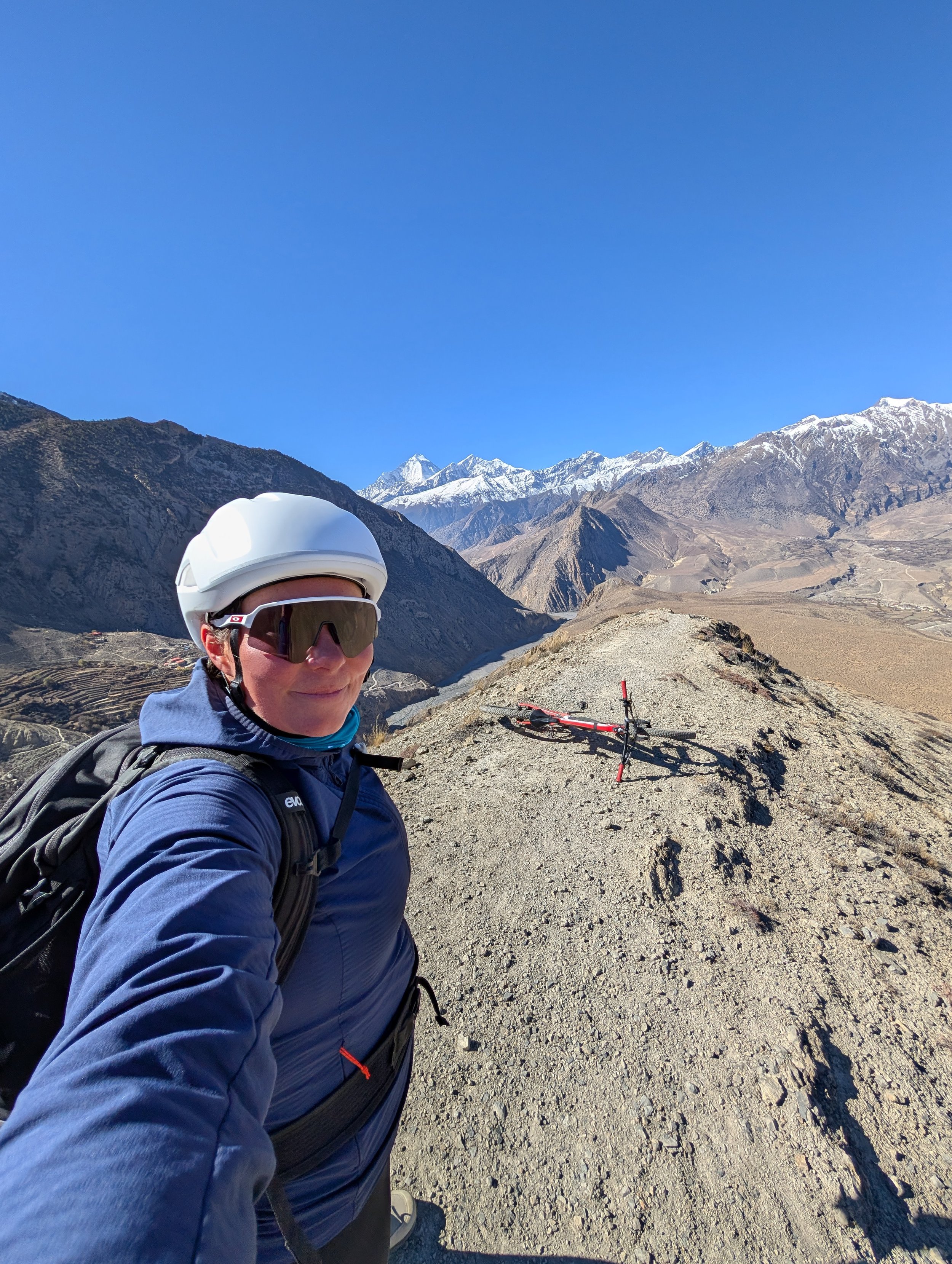
The adventure on the circuit does not end after Thorong La. It continues on a trail where you ride and stop, ride and stop—not from effort, but because you want the moment to last. Turns are naturally smooth, steep drops sharpen attention without force, and wide plateaus facing snowy mountains invite unbroken flow. The tension quietly dissolves, the body relaxes, and the breath settles—I feel light and free, carried by the beauty of the landscape around me.
On the Lupra trail, cycling becomes simple again.
5. The Stage is Yours
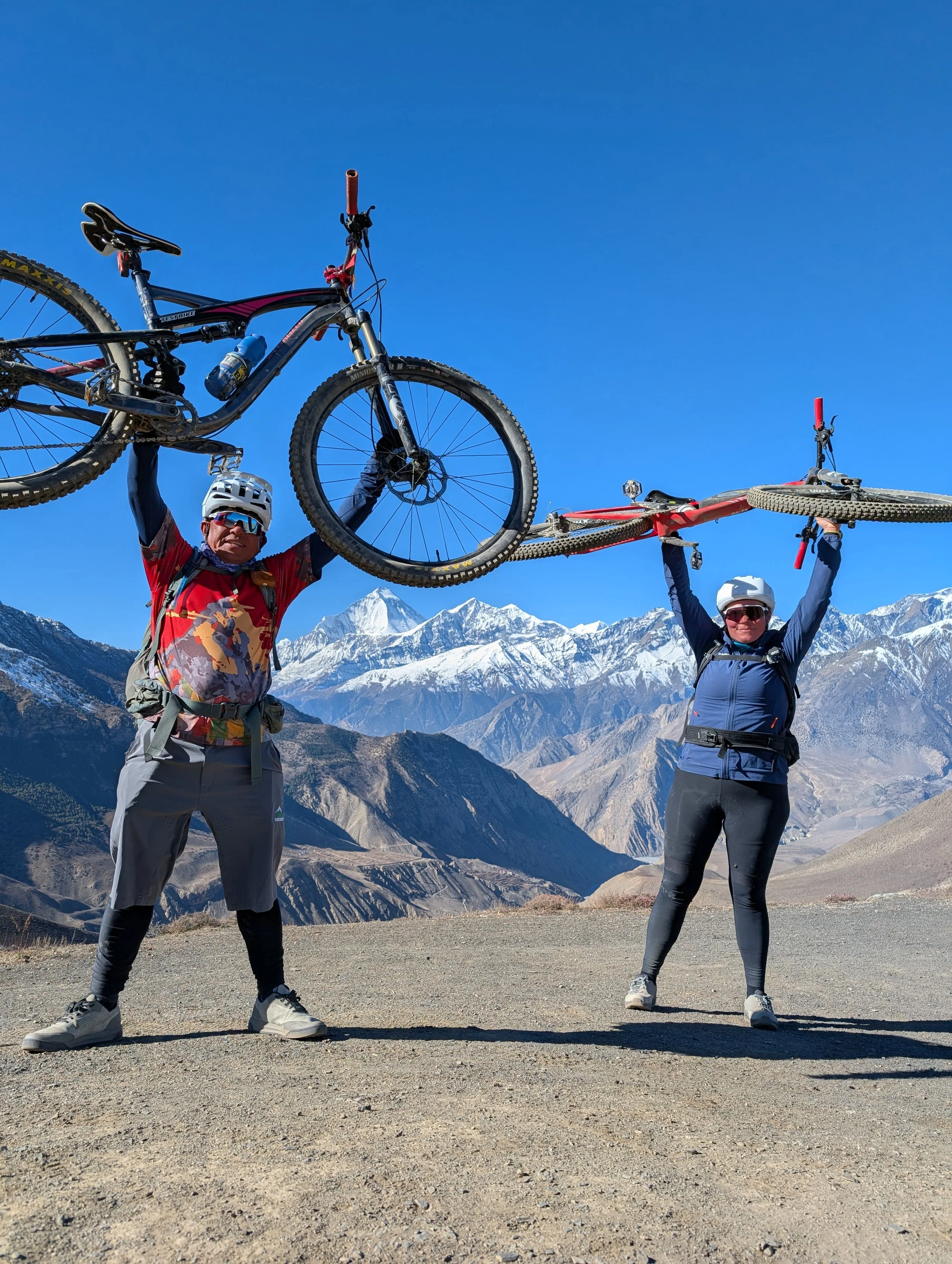
People often think that you need to be extraordinary. When they hear “cycle in the Himalaya,” they picture someone strong, a little crazy, almost inhuman—riding for endless hours, carrying heavy loads, resisting snowstorms, and speaking local Nepali dialects. From the outside, it looks impossible.
What we don’t say out loud is that many of us are good observers. We stay behind the curtain and watch others perform on the stage. My fears had little to do with mountains. I feared how people would look at me, about spending money on an adventure instead of saving, about what my family would say if I did things only for myself—and whether everyday life would still feel meaningful when I came back.
Staying behind the curtain feels safe. I worked more to earn more, trained harder to feel ready, and waited for the right moment. I was preparing—physically, financially, mentally. But nothing suddenly changes. I never became fearless or reckless. I just made a decision. I step onto the stage and do the best I can.
I go to the gym, I build plans B and C. I learn about altitude sickness, and a bit of Nepali. What did I discover? The hardest parts are not the ones I imagined. They are slowing down when your body needs rest, accepting routine, and showing up every morning—sometimes without a shower for days. Things we already know how to do.
So if the Himalaya keeps coming back to your mind, maybe they are not there by accident. Maybe they are that quiet friend who gives you a little push. At some point, the only thing left to decide is whether to stay behind the curtain, or smile and step forward.
6. What Else is Part of the Journey
An adventure is also made of small, everyday things that help you feel good—because at the end of the day, you want to enjoy being there and have the energy to admire the place.
When consequences are far in the future, we tend either to avoid discomfort or to push too hard. In high, remote places like the Annapurna Circuit, taking care of yourself becomes immediate: every decision can turn into a “go or no-go” choice within a few hours.
You learn quickly that dal bhat gives strength, and that a shower brings cold. You stop counting kilometers and start counting liters of tea and hours of sleep as part of acclimatization. Little by little, care becomes a rhythm. Your body teaches you to rest and be present, and your mind follows. The doubts fade, and both doing everything—and nothing—are important in the mountains.
6.5 (Not) The Whole Story
Thorong La—yes, it’s the highest point on the circuit. Yes, it might be your goal. But no, it’s not the whole story.
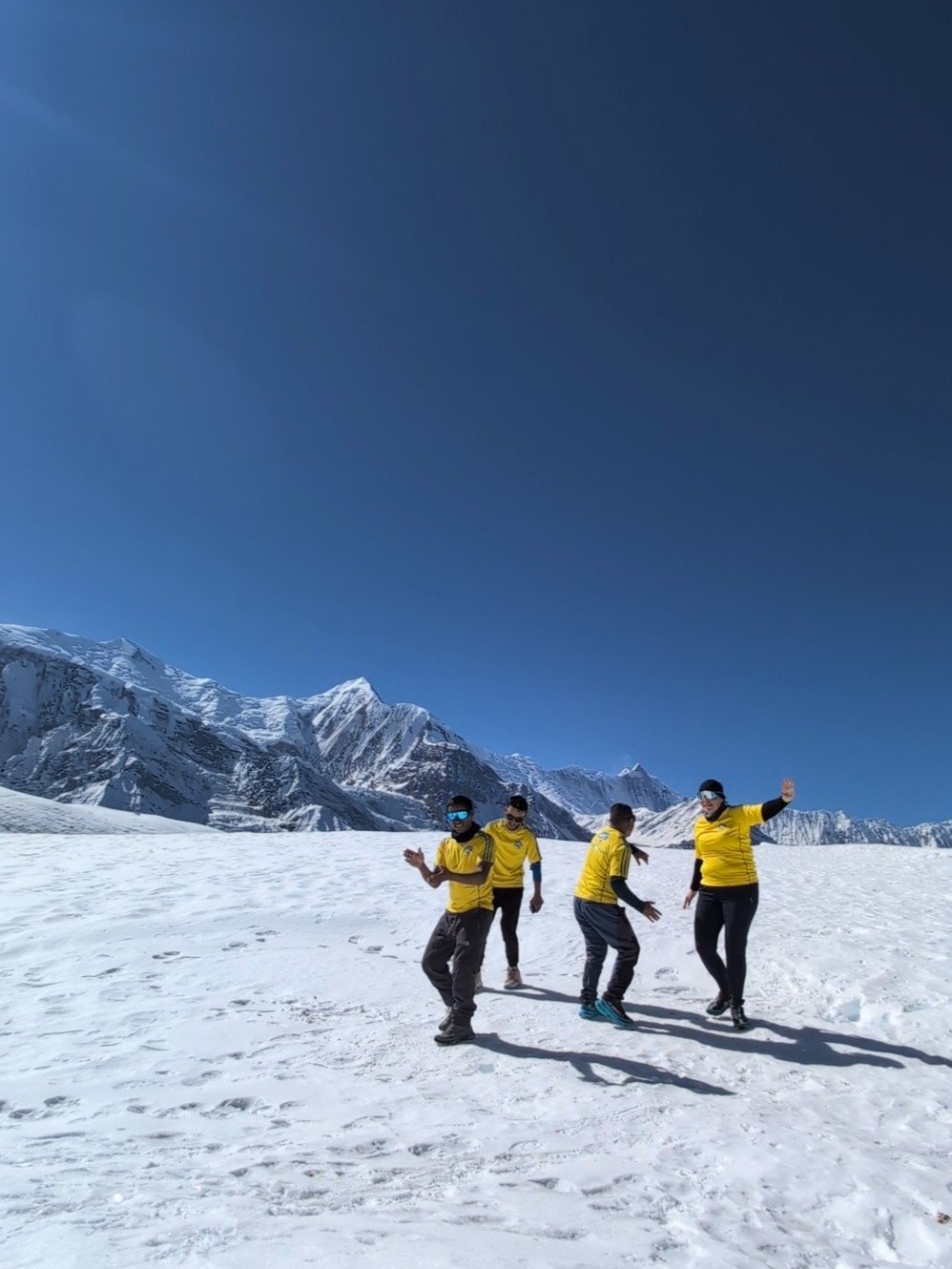
Every day on the trail brings something different and beautiful. Sometimes it’s a lodge and its owners, sometimes it’s an “Annapurna day” when you ride in the shadow of giants. Sometimes it’s a rest day, preparing for what comes next while simply enjoying time with your team.
So what is success for you? One step at the highest point, or the thousands of steps along the way, each bringing something to you, and to others?
More Photos and Videos
Facebook, Pixelfed & My YouTube Annapurna Adventure Videos Playlist