I sometimes wonder whether, in our efforts to make life easier, we've actually made it more complicated.
It’s easier when a house is always warm without having to keep a fire going, hot water runs whenever I want, I have clean clothes everyday, a car, electronics, and plenty of food with all its variety.
And I appreciate that. But sometimes I wonder whether all this comfort comes at a cost.
I work hard to afford it, maintain it, and often to get a little more of it. Days are filled with hundreds of small tasks, decisions and obligations. And in all this running from one thing to another, there's little energy left to actually enjoy what I have or to do something that really matters to me.
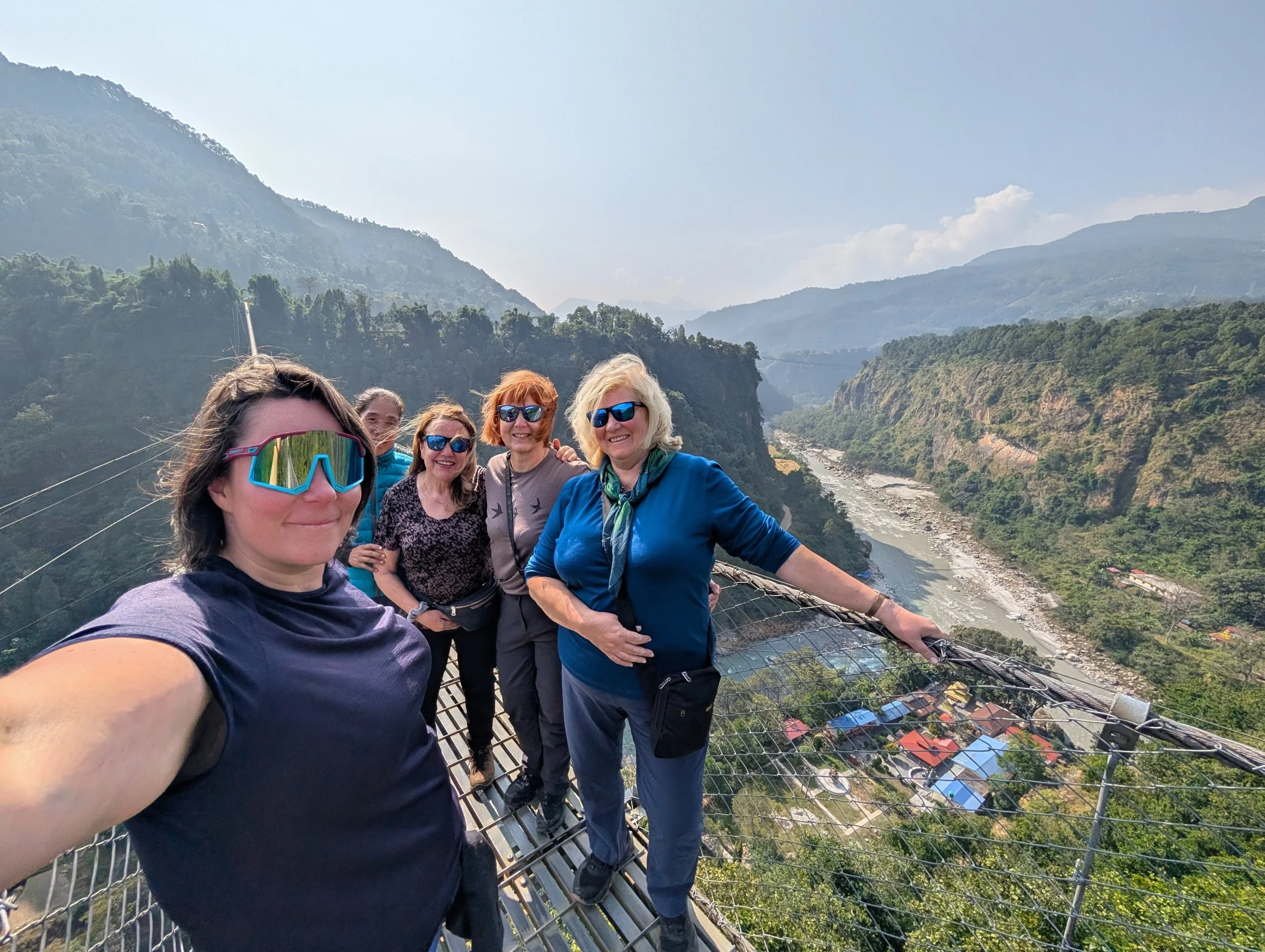
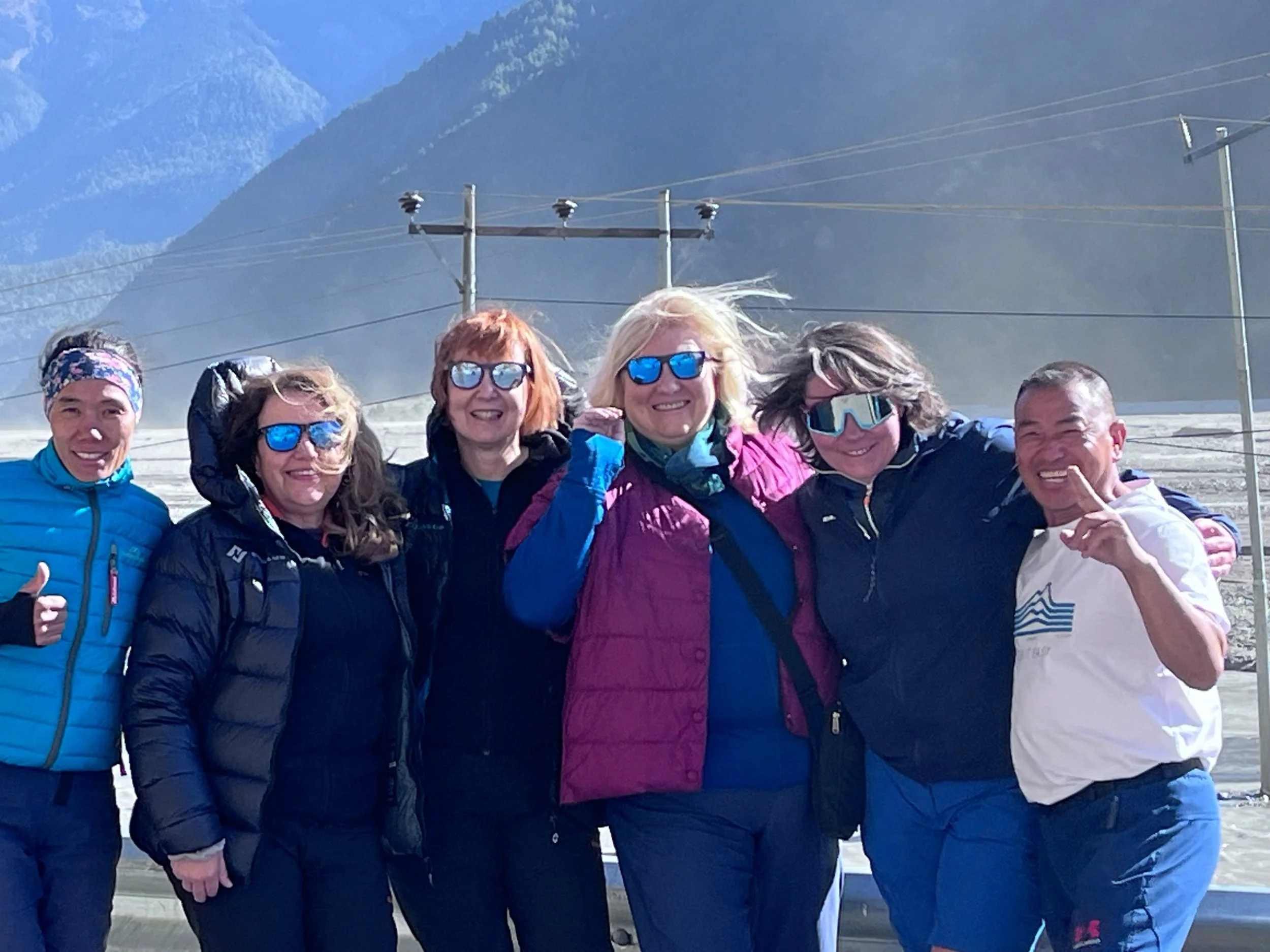
A week after returning from my latest two-week trip to Nepal with my mum, her sister and her friend, my mum told me: "It was like a dream. Now that I'm back home, with all this comfort, looking at photos, I can't believe I spent a week without a shower, managed the cold, and did all those incredible things."
I often say that life on a trek in Nepal is, in some ways, easier than everyday life. People don't really believe me because they see the lack of comfort, the physical effort, the cold and the tiredness. Sure, all of that is true.
But something else happens there.
Hundreds of everyday concerns suddenly shrink to just a few basic needs: eat, sleep, rest, keep warm, get to the next place.
And suddenly, there's space to look around, talk to people and be curious. To try something new, face a fear or discover something about myself.
On a trek, even when I'm physically exhausted, my mind often feels more free.
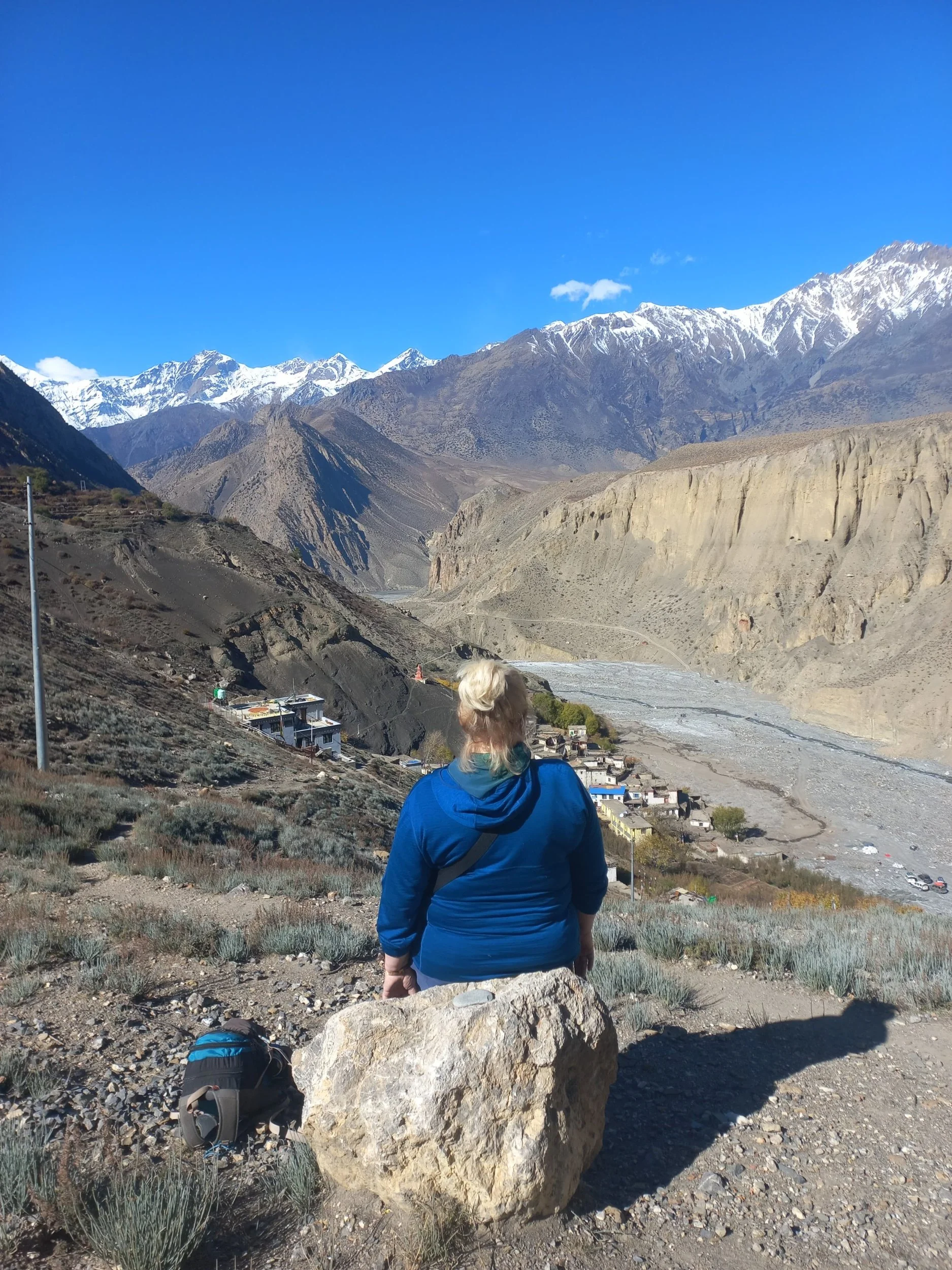
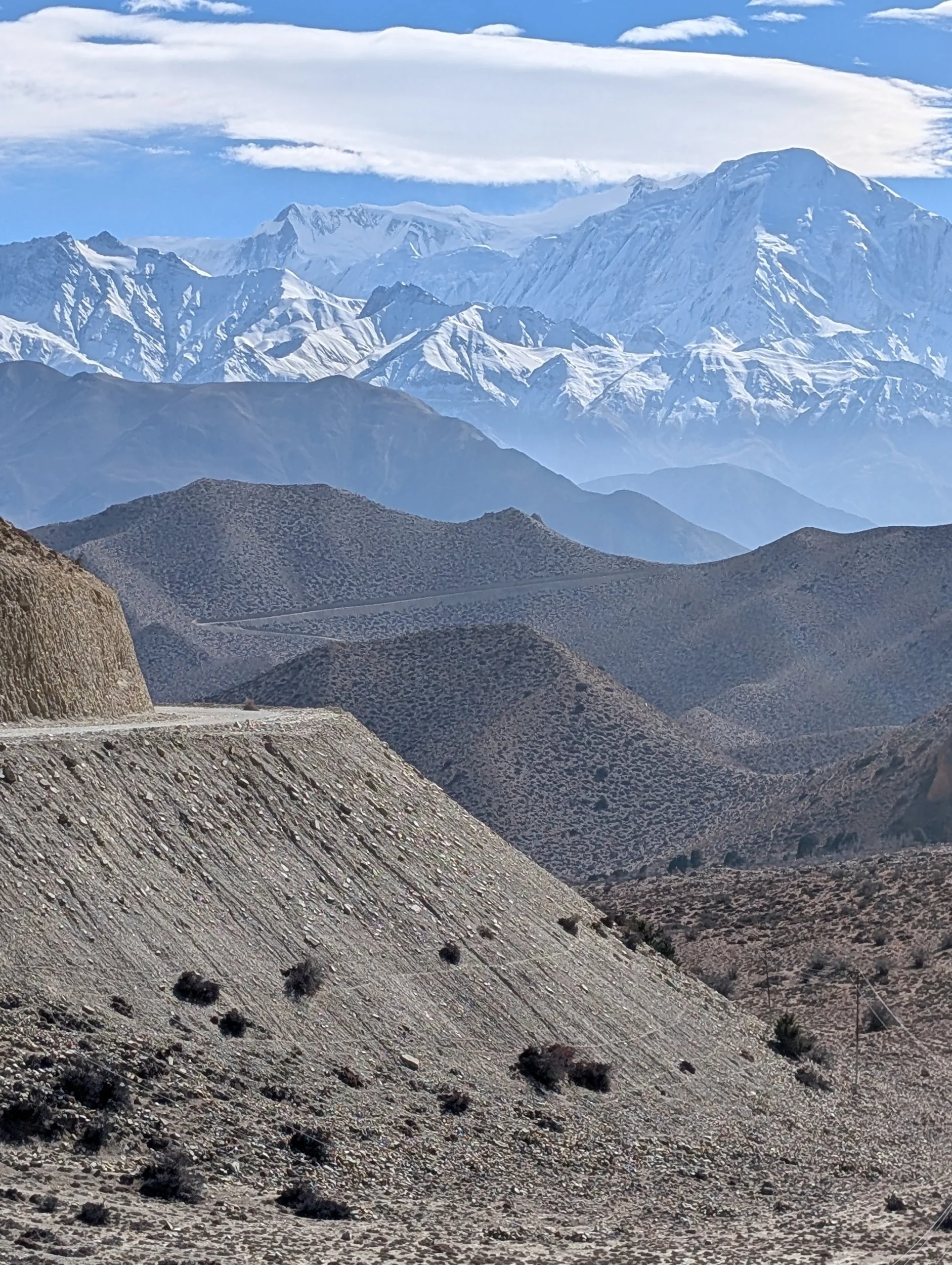
When I asked my mum, her sister and her friend what they liked most about our trip to Upper Mustang, I expected to hear about the mountains, the landscapes, the temples or the beautiful places we'd visited.
But that wasn't what they liked most.
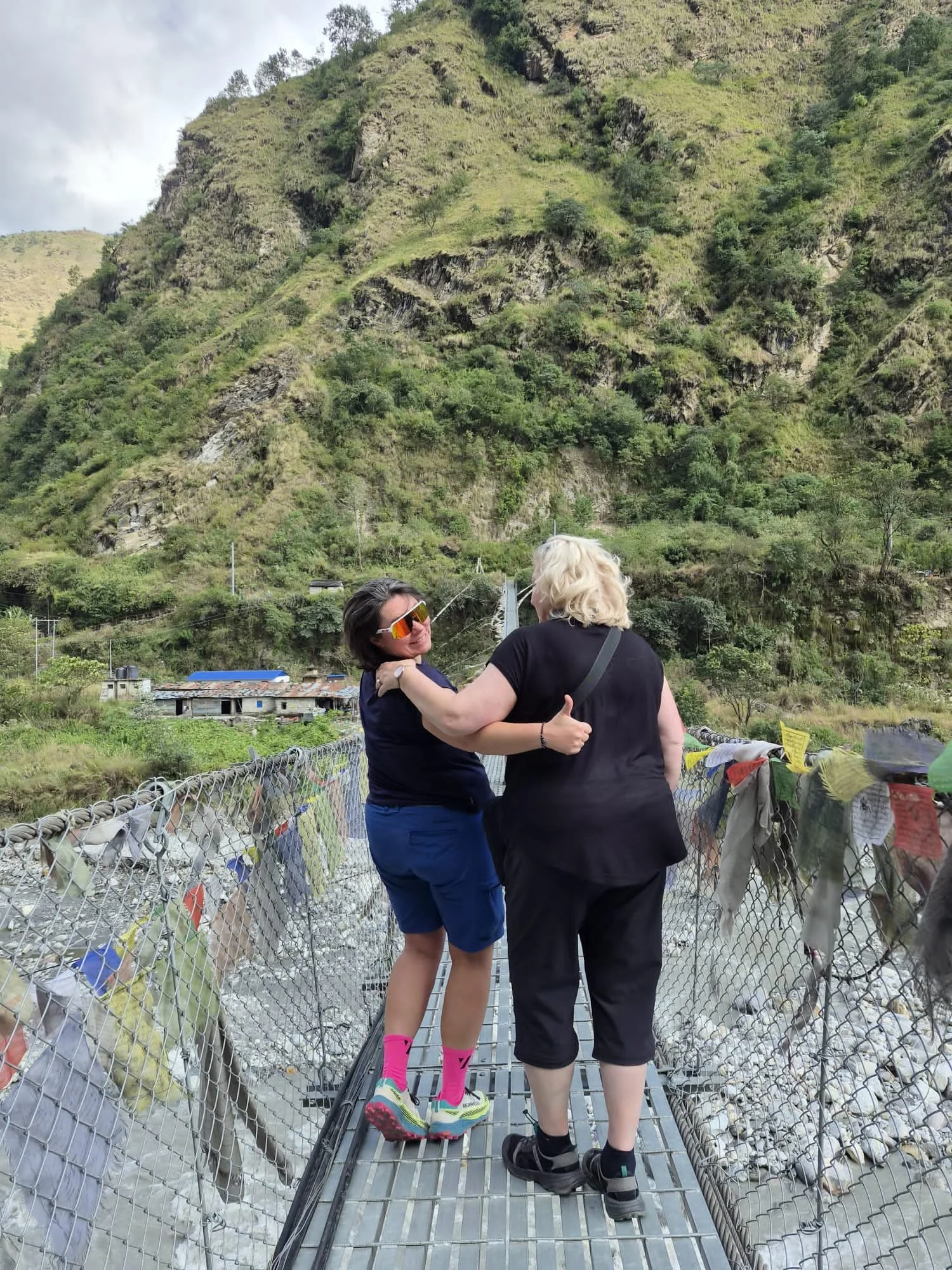
For my mum, who is afraid of heights, it was a suspension bridge in Kusma, hanging more than 100 metres above the ground. She tried three times before she finally managed to walk to the middle. And she was so incredibly happy and proud of herself.
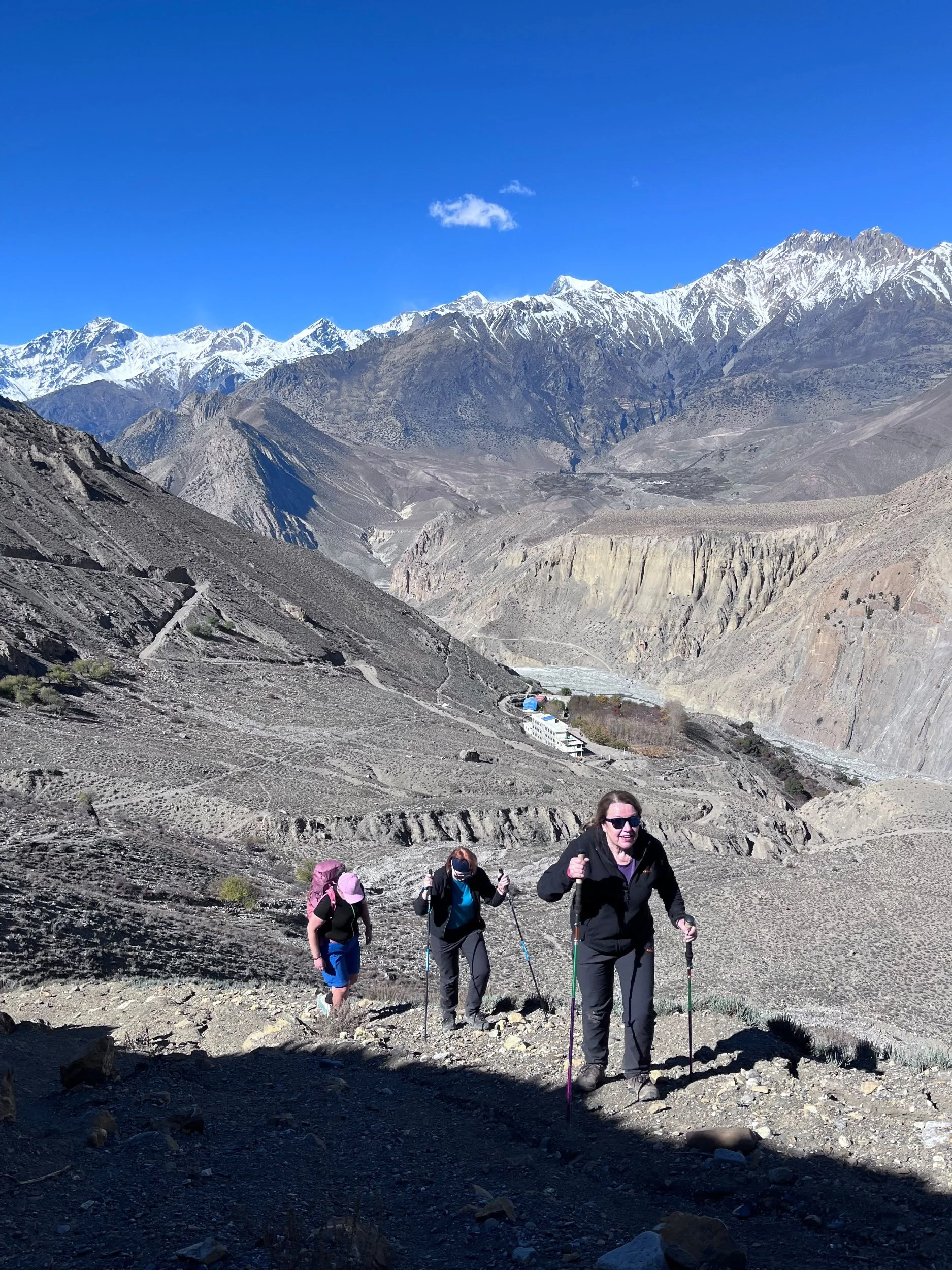
And that wasn't all. She climbed stairs I would never have imagined she'd even attempt. She walked up hills to visit temples, explored villages along rough paths, and talked to local people about their lives and struggles.
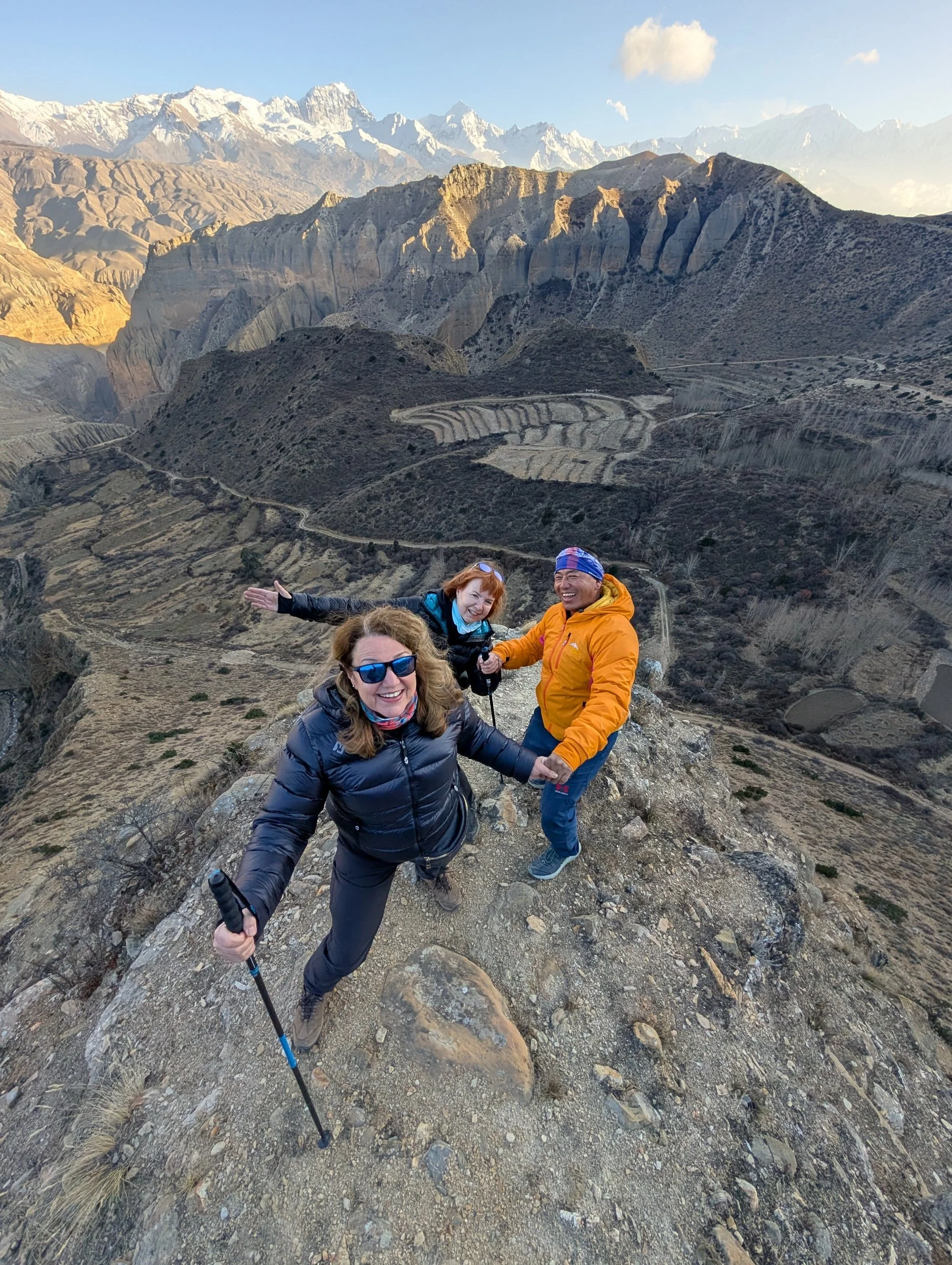
The other two had similar memories. Their favourite moments were walking narrow paths above deep valleys, crossing ridges on shaking legs, crawling through caves without knowing exactly how they'd get out, or climbing rocks in places they would probably never normally attempt.
What stayed with them wasn't just what they'd seen. It was what they'd managed to do.
I find this fascinating.
We spend so much effort making our lives comfortable and predictable. Yet, when we temporarily leave that comfort behind, we sometimes deliberately seek out experiences that involve uncertainty, fear, tiredness and physical effort.
And somehow, those become the moments we remember most.
I wonder how many limits we accept in everyday life simply because we've never had the opportunity, or the mental energy, to test them. My mum knew she was afraid of heights. She probably had a fairly clear idea of what she could and couldn't physically manage. But during those two weeks, she discovered that some of those limits weren't quite where she thought they were.
I know that being able to leave my comfortable life behind for a few weeks, knowing I can return to it, is a privilege.
And perhaps the problem is not comfort itself, but how much of our lives we spend trying to achieve, maintain and increase it.
Every trip to Nepal creates a little distance from all of that.
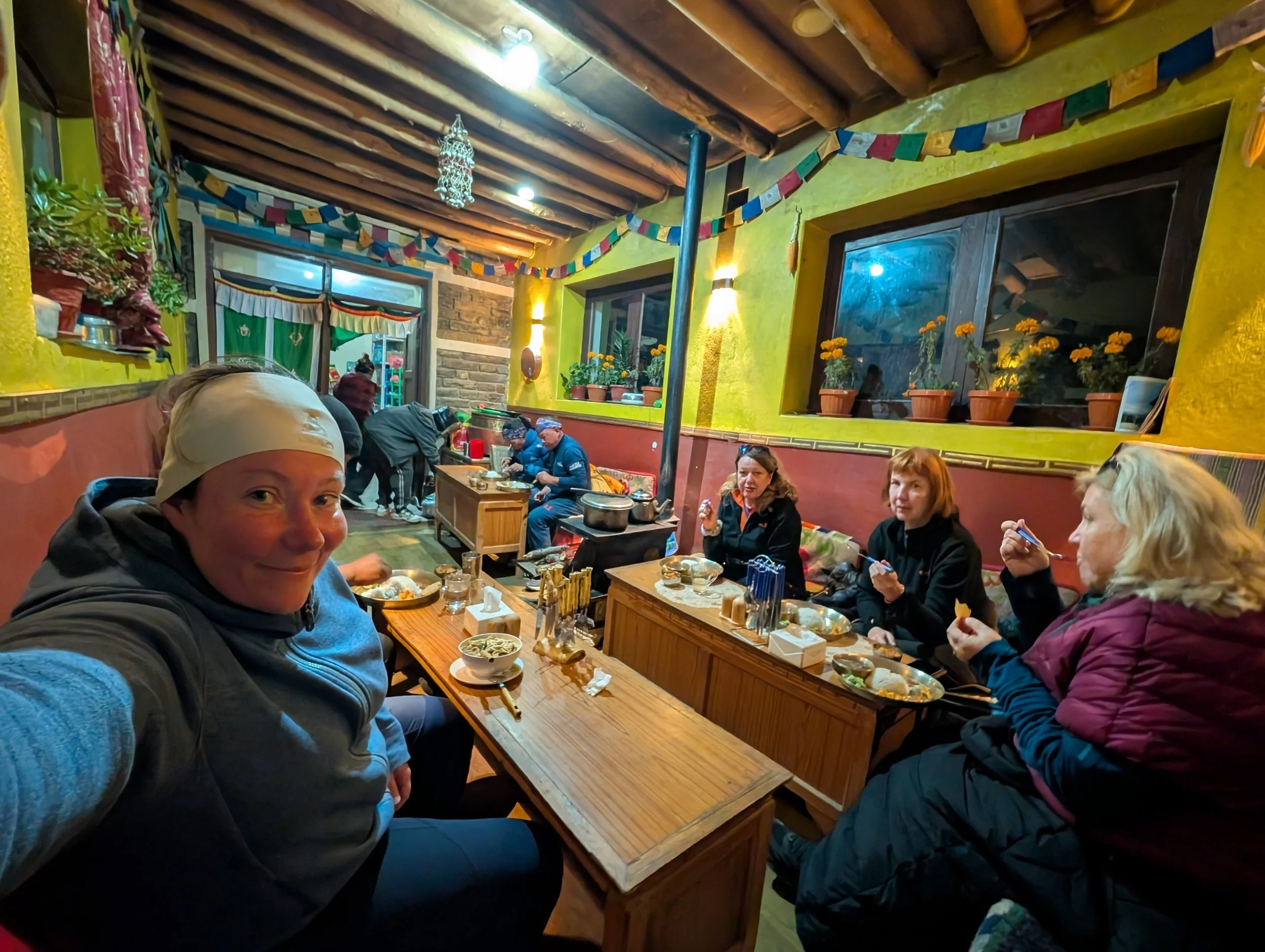
Hot tea tastes completely different when I've been cold for hours. Sitting near a fire, feeling the warmth slowly return to my hands and feet, becomes one of the best moments of the day. Finding hot water in a tap makes even brushing my teeth a moment of pleasure.
Maybe that's also why I keep going back to Nepal. Not only for the things I can experience and limits I can cross there, but also for how little I sometimes need to feel enough.
There, sitting with just a cup of hot tea and nothing in particular to do is often enough.